Sunday, July 28, 2013

Album Review: "The Rolling Stones No. 2" by the Rolling Stones

This album art also appears on the Stones' US release, 12 X 5.
Name: The Rolling Stones No. 2
Artist: The Rolling Stones
Release Date: 15 November, 1965
Label: Decca
Production: Andrew Oldham
Lineup:
-- Mick Jagger, vocals
-- Keith Richards, guitar
-- Brian Jones, guitar, percussion, backing vocals
-- Charlie Watts, drums
-- Bill Wyman, bass
Awards/Success: 10 weeks at #1 in the UK in 1965.
Other Information: John Lennon said of the album: "The album's great, but I don't like 5-minute numbers."

The Rolling Stones No. 2 is very similar to its preceding UK release, The Rolling Stones.  It consists of mainly R&B covers, with a sampling of works by Keith Richards and Mick Jagger.  But there are some subtle differences between the two albums -- differences that make No. 2 a more true-to-style album than its predecessor.  

For one thing, Keith Richards' guitar is more prominent in this album.  He is becoming his own voice, rather than just having a 30-second solo halfway through the song.  A good example of this can be see in the Stones' version of "You Can't Catch Me," where Keith almost duets with Jagger in a nice call-and-response pattern.  Richards will become known as a rock player, but in this album, he's a bona-fide blues musician.  Part of me really misses this guitar-playing style.

Guitar plays a very important role in the original numbers by Richards and Jagger that appear halfway through the album.  "What a Shame" begins with a catchy guitar hook, and while its blues pattern is very predictable, it sounds fresh coming from Richards.  Immediately following "What a Shame," "Grown Up Wrong" is short and placid.  On the B-side, we hear the catchy and impressive "Off the Hook," which begins with more great guitar and features Richards once again cooperating with Jagger.

This is groovy music. The B-Side is my favorite.  You've got "Down the Road Apiece," which is up-tempo and angsty, followed immediately by the cool bounce of "Under the Boardwalk."  The album ends on a high note with "Susy Q," which explores new drum patterns and more rocking guitar solos. While it can be contested that these tracks aren't really "Stony," they sound awesome nonetheless, and they can bring any listener who grew up during this age back to their youth.  

The song "I Can't Be Satisfied," while it sort of comes off a little lame, is important because of the Rolling Stones' deep connection with the song's composer, Muddy Waters.  While Jagger can't quite pull off the vocal line, there is some conviction in it.  As with their previous album, the Stones are coming into their own and realizing their own potential as carriers of the blues-rock genre into the next decade.  They have found their genre.  While these early albums by the Rolling Stones aren't that essential, they may be quintessential -- lasting pieces of history that help define blues-oriented rock and roll for the next generations.  

Hannah's rating: 7.3 out of 10.  Catchy 60's blues-rock. Not much more. 

Here's the Stones performing "Time is On My Side" on the Ed Sullivan show.  Already these boys were winning audiences' hearts.

Saturday, July 27, 2013

Album Review: "The Rolling Stones" by The Rolling Stones

In their early days, producers made the attempt to have the
 Stones resemble other British Invasion bands like the Beatles with
a uniform, clean-cut dress code, but the Stones would later
shed this upper-crust look for a more loose, individualized image.
Name: The Rolling Stones
Artist: The Rolling Stones
Release Date: 16 April 1964
Label: Decca
Production: Andrew Oldham, Eric Easton
Lineup:
-- Mick Jagger, vocals
-- Keith Richards, guitar
-- Brian Jones, guitar, percussion, backing vocals
-- Charlie Watts, drums
-- Bill Wyman, bass
Awards/Success: #1 on UK Top 40 in 1964.  #11 on Billboard 200 in 1964. The single "Not Fade Away" reached #3 on the UK Top 40 Singles.
Other Information: Original songs on the album were listed under the pseudonym "Nanker Phelge."


The Rolling Stones are one of the greatest bands of all time, but few people know much about their earliest works.  There is a reason for that.  This debut album primarily consists of washed-up covers of other blues-oriented rock groups like Chuck Berry.  Members of the band are only cited under three of the tracks. But, as it is with most greats, you have to start somewhere, and this album very well epitomizes what the Stones would later be famous for in coming years.

While today's ears may not find anything impressive in The Rolling Stones, we must consider its importance in the development of this iconic band, as well as the growth of rock and roll in general.  While other British Invasion bands were creating the new pop sound, it was the Rolling Stones that brought blues into the realm of rock, and they did it through covering and copying the greats during their beginning.

My theory about covers is this: If you have something new to contribute, go ahead and sing someone else's music.  In this case, the Stones perform very popular works with a novel, white-boy, rebellious attitude. These guys were taking bold steps by singing "middle-age black music" in the '60s.  Classic jazz and blues references aplenty can be seen in this album, but amid very rock-like instrumentation and the skinny-boy drawl of Mick Jagger. This is classic blues-end rock performed by boys who seem like they already know that they're gonna be rock stars.

This album screams '60's youth mentality: playful, simple, and brash. The song "I Just Want to Make Love to You" is probably my favorite non-original track.  It's almost whiny, and sort of sums up what the Stones are all about: No work, all play. Jagger's got sass. He jeers, whines, and further murders his native dialect with great vocal splats throughout the whole album, and the guitar sort of hangs lazily at the ends of the beat without much care.

This album's sides were split between tracks 6 and 7.  The B-side begins with a smooth, sultry "I'm a King Bee" and ends with the monotonous unmemorable numbers, "You Can Make it if You Try" and "Walking the Dog."  It's in this B side where the original songwriting skills of Jagger and Richards save the day.

The Rolling Stones began experimenting with writing their own songs under the encouragement of their producer Andrew Oldham.  Even this early on, you can hear some originality and potential, though the tracks are hit-and-miss. "Little by Little" was co-written with Phil Spector and was the first song to achieve a spot in Britain's top 5 in 1964, but there is nothing too fabulous about this song; it mirrors the other tracks seen on the record. The other band-written number, "Now I've got a Witness," is unique in the fact that it is purely instrumental and features an already-impressive solo by Keith Richards, who was only 21 at the time.  One of the higher points is "Tell Me (You're Coming Back to Me)," which is the only song that was attributed to Mick and Keith on the whole album.  While "Tell Me' is a great song on its own, its originality and emotion   sort of stick out amid the other boogie-woogie sounds.  It stands as a foreshadowing of the genius that is to emerge from these two men in later years.

Honestly, The Rolling Stones is pretty typical of other blues-style elements coming out at this same time, but it's nice, once again, to get a taste of what these talented men -- particularly Richards -- had to offer at such an early point in their careers.

Hannah's Rating: 7/10  Mainly for its importance in history and for songs like "Tell Me."

Watch one of their first-ever TV spots on Dean Martin's The Hollywood Palace. Man, these guys were dreamy.

Wednesday, July 24, 2013

The Death of the Album: How Music Consumers React in the Digital Age

I regret to announce that I have become a product of the digital age -- an age where the notion of an "album" is beginning to disappear.
A decade ago, at age 12, you would find me perusing the music shelves at Target or Sam Goody, trying to decide which disc would eventually prove itself to be worthy of my meager twelve dollars and ninety-nine cents that I had saved since Christmas.  Usually the winner would be something I already knew and loved: Good Charlotte, Josh Groban, Faith Hill.  Later I would invest in the latest discs from Evanescence or Breaking Benjamin.  When CD-burning became a thing, I'd nab My Chemical Romance or Three Days Grace from my friends who had more money than I did to buy the actual albums themselves.  I remember sitting in my room, organizing all of these lovely crystal cases by title, by artist, or by rank.

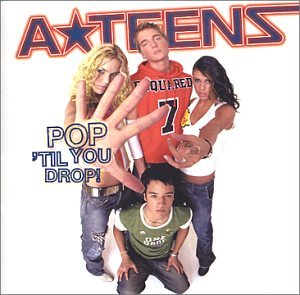
Listening to a CD for the first time was one of the most exciting experiences I had as a child.  I very distinctly remember sticking in A-Teens' Pop 'Til You Drop (2012) into my ghetto CD player at age 11.  I sat down with the album cover, and listened intently to each and every track, in order, following the list of track names as if doing so were the most important thing I've ever done in my life.  If there were lyrics included in the album cover, I would read along with pious devotion.  If the album was awesome, my focus would not quaver in the slightest from the opening track to the final note played.  If the album was lame, I'd usually get bored after track 5 or 6 and begin to listen more passively.  The CD-listening experience was always an adventure.
But then iTunes came along, and suddenly I can buy albums in bits and pieces.  The first song I ever bought on iTunes was "I Gotta Feeling" by the Black-Eyed Peas, off of their album The E.N.D. in 2009.  I was a freshman in high school.  I have never bought the rest of the album.  Since then, I've become a sucker for the 69-cent singles sales on iTunes, filling my little iPod with dozens of one-hit wonders and one-track album lists.
But, as I began writing music myself, I had an epiphany.  This kind of purchasing behavior is causing the album to die.
 During the "golden age" of the album (think late 70's all the way up to the mid 2000's), buying an full record was a risk.  Usually you only knew one or two songs off of the whole thing; the ones you heard on the radio over and over again. You like what you've heard so far, but there is no guarantee that the rest of the album will measure up to what its singles have to offer.  As I had experienced, only the best albums could keep my attention from beginning to end.  Some of these albums from my childhood included The Beatles' 1, Evanescence's Fallen, and Middle of Nowhere by Hanson.
For a musician, creating an album -- a solid, complete album -- was an art form. Because of this risk factor, it was important to write music that satisfies the needs of the consumer as well as the musician, or else they may not ever buy your album again. In order to make a good album, you not only have to worry about individual songs, you have to consider the big picture.  Consider the story you are telling with your music.  Even if there is no overarching concept to your album, there is still a change of mood from track to track that you must consider. Do you want to begin with a bang? Do you want your audience to know exactly what they're going to hear for the rest of the album in the first couple of tracks?  Or is there a dramatic change of tone that you want your audience to embrace? What are the album's high and low points? Do you want your audience to leave your album with awe? With introspect? With melancholy? Heck, you can even go further and start comparing this album to other albums you have made in the past, and albums you may make in the future.  Do you want to be known for something different than you have been doing before?  The best way to state change is through the release of a fresh new album! If you take a look at how well-crafted albums like Fleetwood Mac's Rumours or Nirvana's Nevermind are, you get what I mean. All of the best albums in history tell some sort of story, even if it's not completely scripted within the music itself.  

Furthermore, album-focused artists usually trust their audience to maintain attention and take their work seriously from beginning to end. I feel like a stronger relationship is formed between musician and listener when there is a level of trust embedded within the musical experience.
Not to say that great music isn't currently being created, but honestly, there's something missing.  Back in the golden age of album-making, it was quality over quantity, and it was concept over commerce.  That age is almost gone.
Why? Digital media now allows consumers to buy music on a song-by-song basis.
Now, when you buy music, there is little to no risk.  You can pick and choose what songs you want.  If all of them are pretty good, you can buy the album, but if you really are only interested in what you heard the other day on the radio, you have the option to spend a few cents on one song rather than spend several dollars on a whole album that you're really not interested in owning.
This digital trend can be really cool.  I mean, I'm not the biggest fan of electronic music, but when there's one song by Zedd that I like, it's nice to know that I can put my money where it will be most useful for me as well as useful to Zedd and anyone else who was involved in making that track. While I otherwise would have just skipped the purchase completely, I can at least support artists in a small way by buying what is valuable to me.
This also means that a lot of time, money, and effort is put into creating very well-crafted and interesting singles.  I feel like there is more variety on the radio than there used to be; in order to stand out in the musical crowd, musicians and producers are adding new things (mainly technology) to individual songs that make them memorable and interesting.   This digital age has also been a blessing for indie record companies, who never would have seen the light of day if it weren't for mass consumption of digital music via the internet.  Songs are super catchy these days, and they are recorded with quality sound and are given lots of publicity.
There are good things that come with technology and digital media.  This I know.
BUT... While singles are getting better in some regards, almost everything else on a typical modern-day album is worthless. From the sound of it, not much investment is given to tracks that aren't on the docket to become singles these days.  I'm thinking of the most recent albums by Daughtry, 'Lil Wayne, and (sadly) the newest work by Sara Bareilles, The Blessed Unrest.  There are a few gems, but as album, it sucks. Even some of the more talented album creators are falling into the single trap. Take a look at the before/after shots of bands and artists like Bon Jovi, Korn, Bonnie Raitt, and Nelly.  Heck, even if you look at Britney Spears's Baby One More Time..., you can see craftsmanship and (dare I say it?) class that you just don't see in her more recent albums. Albums are losing their place in today's musical marketplace.  It's becoming less and less about the big picture, and more about the get-rich-quick approach of releasing single after stinking single.
What changed? Digital media.  The minute you could start selling music on a track-by-track basis, the notion of the album completely changed.  Suddenly it becomes only an afterthought.  Or sometimes it became a vessel in which a brand could deliver a whole bunch of singles at one time, even though they may all be completely unrelated and disjunctive if you put them together as a whole.  I'm thinking specifically of Katy Perry's Teenage Dream, which, while almost all of its singles were very successful, doesn't really stand up for itself as an album.
Think of it this way: You don't usually display pieces visual art on an individual basis.  Usually they appear in a gallery exhibit, surrounded by other pieces that are similar or different from it.  This gives a work context, which is one of the biggest factors in creating valuable artistic statements.  There needs to be a story.  The content must have a context.
This is why I think indie albums are better quality than mainstream-label records.  For those who don't have the resources or publicity to keep shelling out single after single, it's all about the the impact you can give to a listener in one go with one great album.  I feel like under-cover artists are usually more artistically fueled than big superstars, because money hasn't yet become a factor.  When you are a band that's bone-broke and barely getting gigs, it's not like your main goal is how many millions of dollars you can make. The profit craze of big-name labels has not yet infected the fresh, creative minds of young, up-and-coming artists. When such bands or artists DO get big, they can "sell out" -- and you hear the difference.
My proposition? Reward consumers for taking the risk and buying an entire album.  This responsibility lies in the musician, the listener, as well as the producers, advertisers, and marketers of popular music.
For musicians, this means continue to TRUST your audience by making quality music from beginning to end! Don't ignore the "connective tissue" of your album. Not every song has to be a single, but that doesn't mean every song that's not a single has to suck. And maybe it would be a good idea to fight the urge to make every radio-friendly tune you have a single.  Save some stuff for the people who do take the time to buy your album. You don't need to be shoving singles down people's throats for them to listen to you... That is, if your music is good.  If you make art, people will recognize it.  This internet that we have makes it so easy to publicize and gain rapport.
And listeners? Don't waste your time with poor music!  Do your homework. We have preview options now.  You can know a whole album before you ever buy it using tools like Spotify and album reviews online.Don't become complacent! Find out if an album is great.  If the album is not great, don't buy it! Sure, buy the singles if you want, but don't waste your money on something not worth listening to. If an album IS worth your money, BUY IT. Don't download it for free.  Don't just get the singles.  BUY THE ALBUM.    Support the sale of the complete work!  Give artists an incentive to keep creating good music.  You can talk about the brainwashing influence of the music industry all you want, but honestly it comes down to what YOU as a consumer think is good art.  This is a great power!

And marketers? You can make it easier on consumers as well.  Think about successful franchises like Sam's Club, where both consumer and producer get rewarded by operating on a bulk system.  Let's take a random CD available on iTunes: N*Sync's Celebrity, which was released in 2001.
Currently, the CD is $9.99.  If you were to buy every track individually, you would have to pay $13.77.  So yeah, you do save money buy buying the whole album at once.  But of course no one would buy every track separately when they can buy the whole album at once for a lesser price.  Let's be honest here.  Few people would even buy HALF of the tracks (up to around 7 bucks) individually.  But they will buy the singles!
BUT... Take a look at the singles.  There are 3 of them.  You can tell because these songs are priced at $1.29, rather than just 99 cents.  If I were to just buy the singles (and that is assuming that I want to buy ALL THREE of them... I mean, the only song I really remember from that album is "Pop"...), iTunes would make $3.87.  But then I only have 3 songs.  And iTunes COULD HAVE HAD ten bucks if I bought the album.  
Here's my thought: Why not encourage the purchase of full albums by selling them for less?  Rather than just marking up the single price (remember when they were 99 cents just like everything else?), why not mark DOWN the album by a greater margin?  Of course it's a little unrealistic to do this for new releases, but this album is over ten years old.  Why not make it five bucks? Rather than just make $3.87 for the singles, iTunes could make an additional dollar or more on an album that hardly anyone buys anymore. People would be more willing to buy an entire album for five bucks than just buy three songs for three.   It would be like a digital bargain bin.  
What about the "Complete My Album" option on iTunes? Yeah, it's a nice thought, but I honestly think this could be a great opportunity for music companies to encourage album purchases.  I, for one, would love to hear someone say, "Hey! You bought one song! Why not enjoy the whole album at a reduced rate??"  Of course there are shortcuts that consumers can take, but what if they bought one song three years ago, and they still haven't "upgraded" to the rest of the album?  Maybe you can provide album discounts for artists related to what the customer has bought? What if we mark down albums like Celebrity that are over a decade old and aren't making half as much money as they used to?  Why not include bonus tracks that are exclusively offered to those who buy the complete album? There are lots of options for not only making money, but also encouraging consumers to expand their horizons and learn more music than just what they hear on the radio.  
At this rate, the album will be dead in a decade. Let's not let this happen!  Support the movement of the album by being smart consumers!  

Saturday, July 13, 2013

Soundtrack of the Summer (So Far)

"Effect and Cause" -- White Stripes
"Clarity" -- Zedd ft. Foxes
"Ya Hey" -- Vampire Weekend
"At Least I'm Not as Sad" -- Fun.
"How Come You Don't Want Me Now" -- Tegan and Sara
"I Think I Love You" -- The Partridge Family
"As Time Goes By" -- Louis Armstrong
"It's Only a Paper Moon" -- Miles Davis
"I'm Shakin'" -- Jack White
"Caroline, Dress in Blue" -- Officer Jenny
"Wagon Wheel" -- Old Crow Medicine Show
"I've Got a Ways to Go" -- Grouplove
"Scars from an Old Love" -- Hazel Dickens
"Boys with Girlfriends" -- Meiko
"Not Your Fault" -- AWOLNATION

Make a Wish

Thursday, July 4, 2013

A Journal Gem: June 25, 2006 -- To wipe away EVERYONE'S tears.

I was 15 years old when I wrote the following entry in Aubrey:

[In choir today,] we sang "I Know that My Redeemer Lives."  That's my new favorite hymn.  There is one verse that hit me so hard it brought me to tears during practice once. 
He lives to grant me rich supply.
He lives to guide me with his eye.
He lives to comfort me when faint.
He lives to hear my soul's complaint.
He lives to silence all my fears.
He lives to wipe away my tears.
He lives to calm my troubled heart.
He lives, all blessings to impart. 
 There are couple of reasons why I love this verse so much.  The first one my mom explained during practice to the choir.  He's there to comfort me. To wipe away my tears, to calm my troubled heart.  Not just as a congregation, but me personally.  He lives for me. It makes me feel like a true daughter of God and that he loves me.
But you can take it another way, too.  You see, I'm not the only one singing the song.  The people in our ward choir sang it this morning, and all over the world, people are probably singing the song.  That means everyone's soul is important to God as well.
Everyone's! Shannon's, Mom's, Mr. Bob's, Ian's, David's... Just the thought of David made me cry.  When I sang that song last week, I imagined Christ looking straight into David's tear-stricken eyes, and he lifted David's head up with his gentle hand.  Then I saw me, sitting with my head in my hands, apparently upset, stressed, and discouraged about something, and then Christ is there, putting his hand on my shoulder, and smiles at me. 
And then -- and this is the part that really to to me -- I saw Brett.  Yep, Brett.  He was crying, but they were happy tears. They were tears of joy.  Christ was there, again, facing Brett and smiling. Then he put both his hands on Brett's shoulders, grasping firmly, but gently.  Then they embrace.  That's when I realized what a fool I've been, holding a grudge over Brett like that.  Sure, he had hurt me, made me feel bad about myself, but he's God's son. Just like I'm his daughter.
He's my brother.
How should I treat my brother?
Not with anger and loathing, like I was.
And that goes for everyone I know.  They are all my siblings, and I should treat them just as kindly and respectfully as I do my blood family.  I've changed my whole outlook on how I should act towards others.  When school starts, there will be no more gossip, backbiting, cruel remarks, or arguing.  Regardless of what they have done to me.  He lives for them. God created them. They are each individual sons and daughters of God. God doesn't make mistakes. Jesus loves them to the end. I want everyone to know that. I want everyone to know that our Redeemer lives to wipe away each and everyone's tears. I don't ant anyone to not know that.  How could I live without knowing that? It makes me really want to spread the gospel.

Listening to: "Sail" by AWOLNATION
Things Going On Today: Happy Fourth of July!  I'm probably going to see little Daniel Hale today.
Blessings: VCRs.
Learned: You can resolve to I from ii! 

Sunday, June 30, 2013

How I Found Happiness and began the Best Year of My Life -- My Discovery of Christ's Atonement

I'm so thankful to my freshman Bishop, Bishop Armstrong.  Back in 2009, I had some trouble with the notion of repentance.  In response, he challenged me to read and study out of the book Preach My Gospel.  Well, it has been almost four years, and I still haven't completely read it yet.  But I did make the right choice in following the promptings of the Spirit that invited me to begin reading it again in January.  For several weeks, I got up a little earlier than normal and read the scriptures, using Preach My Gospel as a guide.

The cool thing about Preach My Gospel is that it's designed as a tool to help you teach others about the church.  People who have never heard about Jesus Christ of the notion of pre-existence or the idea of baptism need to be informed about these kinds of things in very simple, basic terms.  They can then build from that solid, straightforward foundation and, line upon line, precept upon precept, they can learn more until they have gained a full-blown testimony of the Gospel of Jesus Christ.

As I was reading about the Atonement in Preach My Gospel, I came to an astounding and somewhat horrifying discovery: I, myself, did not know very much about the Atonement.  Not enough to teach anyone else about it at least, that's for sure. How could I ever teach someone about something I didn't even remotely understand?  It's true, you can't ever completely understand the Atonement, but I didn't even feel like I understood even the most basic parts of it; mainly, how it applied to me, and to people in general. 

Furthermore, how could I much less have a testimony of something like the Atonement while remaining so ignorant about it?

DO I have a testimony of the Atonement? Suddenly my whole spiritual center was called onto the carpet for questioning.  Alma talks about conversion -- a change of heart -- a receiving of Christ's image in our countenance -- a spiritual rebirth.  Have I truly experienced these things?  Am I truly converted? Do I really have a testimony of the Atonement of Jesus Christ?  

I've been a member of the church all my life.  For twenty-two years I have worked under the assumption that I was a child of God and that the Gospel was true... but I don't think I ever TRULY believed it in my heart.

So I started doing some research.  I learned a little bit more about what the Atonement actually entailed.  My memory was refreshed about a couple of things, like how the Atonement overcomes both physical AND spiritual death.  I learned that Christ not only suffered for our sins, but also for every other unfairness, struggle, or pain we've ever suffered or will suffer.  He was able to do this because He, Himself was not only capable of doing it (due to the fact that He is God's Only Begotten and he led a perfectly sinless life) but also because he was willing to do it.  The Atonement was indeed a choice.  It did not HAVE to happen.  Christ could have damned us all by being selfish and not finishing the work he was appointed to do.  But he was willing to suffer all of that sin, heartache, and hurt because he loved us.  And, as hard as it is for us as humans to wrap our brains around that kind of love, it is SO IMPORTANT. 

By the time I had to leave for school the morning after reading all of this stuff and coming to all of these epiphanies, I asked myself the following questions:

So if the Atonement is super important and vital to our salvation (which I assume it is), what can I do to actually get it to work in my life?  What must I PHYSICALLY DO to implement the Atonement? How do I use it? 

 I know obedience is part of it.  I know God wants us to show that we care about what the Savior did for us by following His example and obeying His commandments.  Sure. I get that.  But there are people all over the world who do amazing, good things; people who lose themselves in service to others, who keep themselves clean and chaste.  People who are truly sorry when they make mistakes.  People who love the God that they know, without ever hearing about Christ or the Atonement.  People who are good, yet ignorant.  They exist all over the world.  Some die without ever hearing the good news of the Gospel.  Why is it that we so strongly encourage people to hear about it?  Why is it that we send out thousands upon thousands of missionaries every year so that they can tell these ignorant people all about it?  What important missing piece does the Atonement provide in our lives?

WHAT DOES HAVING AN AWARENESS OF CHRIST'S ATONEMENT DO FOR US?

I guess knowing about the Atonement allows us to use it.  But then there's that question, how is it that a person can USE the Atonement?  It's not like a pill you can take or a hat you can put on.  It's not a physical thing as much as it is an eternal, esoteric and ambiguous idea. And it's hard to wholly implicate an idea into your life in a way that yields any tangible, perceivable results.  It's like faith in the fact that you must trust that the Atonement works without seeing or hearing or touching any physical evidence of its working.

This sort of makes me jealous of the Catholics.  They believe in the idea of TRANSUBSTANTIATION. It's a long word that basically references the idea that the Eucharistic emblems of bread and water literally change into the blood and body of the Savior as they are partaken by worthy members of the church.  It's a false doctrine, I know, but it interests me.  The idea that you are actually eating the blood and body of Christ may be wrong and even a little grotesque, but I can understand why people might like to think that the Sacrament works that way.  This idea of making Christ a PHYSICAL PART of us -- of having him be a part of our own physical bodies -- helps us make him a part of our soul.  It makes coming unto Christ seem just a little more possible.  To change something that cannot be physically perceived or handled is a challenge for us, so we seek some way of making our desire to be like Christ as physical of a thing as possible.  We may believe in a physical change, in hopes that the spiritual change may soon follow.

Now it's never as literal as transubstantiation, but I do believe there is some truth in that notion.  Performing a physical act helps the promises we make and the mindsets we adopt seem more REAL.  That may be a reason why God has us perform ordinances like baptism, confirmation, and rituals done in the temple.  Doing something physical helps us remember the spiritual experience better, but I think it also results in a physical change within us.  Change only happens with action.  Again, inertia. We must fight it with movement. Physical transformation. As I have learned about the Gospel of Jesus Christ, I have concluded that Spirit itself has matter.  They say God is light as well as truth. And while truth may not have any physical properties, light does.  Perhaps God manifests his spirit physically through light... Perhaps our spirits within us -- which, incidentally, are in the possession of the Light of Christ -- have physical properties as well.  Perhaps the neurons, cell structures, and molecular foundations of our physical bodies are fueled by this physical spiritual matter.  Perhaps when we talk about being "quickened by the Spirit," we are referring to the way the spirit physically enlivens a human being.

I guess my point here is this: Maybe spiritual things like the Atonement aren't as esoteric and abstract as I initially believed.  But this really is all beside the point.  That discovery was made after the fact -- after I experienced what I experienced on Wednesday, January 9, 2013.  

Nothing earth-shattering happened.  No large miracle took place.  I saw no angel, witnessed no amazing wonder... heck, I didn't even physically hear that still, small voice that people sometimes hear.

It was like everything was the same, but at the same time, everything was different.

I got up from that period of studying about the Atonement. I got dressed and got in my care and drove to school.  I can't remember what I wore, but I know it was black and white... no, it was gray! I remember! I was wearing my new skinny jeans -- gray ones -- that mom gave me for Christmas, as well as a gray-and-black flannel T-shirt... I felt very comfortable. Beautiful, even.  My new short haircyt actually looked like it belonged to me that day.  I walked into Music 305 (first-semester of Western music history), and I felt like smiling at everyone... I sat and listened to Doctor Howard, and every word that came out of his mouth seemed to fascinate and excite me.

I have this bad habit of attaching meaning to everything. I may talk more about this in another post, but I tend to associate simple objects, places, and events with negative experiences that I've had previously with them.  If I watch a movie with a boyfriend and we end up having a bad break-up, I usually can't watch that movie again without feeling sick inside.  But today, it was like the opposite was happening.  Everything around me seemed to remind me of happy things.

The experience reached its climax directly after class was done.  I was sitting in the foyer of the Madsen Recital Hall, reading about chant.  Back in the medieval period, monks would sing a lot of psalms in a chant.  Oftentimes, they end with something called the Lesser Doxology.  Essentially, it's a little tag that is added at the end of the psalm that praises the Trinity ("Praise Father, Son, and Holy Ghost").  But sometimes the Doxology doesn't quite mesh with a given chant melody; sometimes the modes are different.  So what writers of chant would do is create alternate endings to the doxology so that you could go straight from the Doxology into a new verse of chant.  It all makes lots of sense now, but as I read about it that morning, it didn't make much sense right away. 

But then, after re-reading a few things, thinking about it for a moment, and exerting a little bit of patience, it was suddenly like a lightbulb went off in my head and everything made sense.  There were alternate endings for the doxology to help ease musical motion between chant verses! DUH!

And then, without warning, I found myself crying.  I'm having trouble finding words for what I felt in that moment.  JOY, definitely, but more than just joy.  I remembered, in that moment, where the joy came from.  I found myself saying prayer after thankful prayer to my Heavenly Father. I thanked him for music, for chant, for the class, for the book, for my brain!

And suddenly the world around me changed.


Have you seen these commercials?  There's this allergy medicine called Claritin, and I feel like the commercial for this drug provides a good demonstration for what seemed to happen to me in that moment as I was studying.  Watch and see how the beginning picture is different from the end.  Yes, the invisible strip pulls away and suddenly everything is brighter and more colorful than it was before, but the cool thing is you probably wouldn't have realized that the first part of the commercial really was a little dull and blurry until you saw the drastic difference.  That's kind of how it happened to me.  The world I was looking at before, it was okay.  But when you start seeing things in an eternal perspective, everything GLOWS.  Suddenly everything around me was bearing testimony of Jesus Christ, and I could actually see it.  It's like those little toys you get at McDonalds, where all you see is red dots unless you put it under this screen that makes a picture.  I was finally seeing the picture!  My perspective had changed so that I could get a glimpse of the world the way God sees it. It was like I put on a pair of glasses that makes the entire world clearer and more vibrant.  I didn't even know that the lenses I was using before were that bad!  But now that I had seen this, I could never go back to the old way of looking at things.  Why look through lenses that make things seem dull and unfocused? Lenses of anger, regret, jealousy, or heartbreak -- you'll never see the beauty of things unless we choose to see things in a way that makes them beautiful.


The Atonement makes things Claritin clear. 

I discovered that I had figured out more than simply how to use a lesser doxology. I had figured out how the Atonement can work in my everyday life.  There was the REAL miracle...

Using the atonement involves discovering the deeper meanings behind why we do things.  The deeper meanings behind existence.

Elder Bednar puts it best when he says that the Atonement has enabling power.  Not just healing power.  It doesn't just fix your sins and overcome death.  It makes you capable of DOING THINGS.  I like to think of the Atonement as a TRANSFORMING AGENT that allows those very real, physical transformations to happen.

What can the Atonement transform? Well, it turns something simple like saying you're sorry into something meaningful: Repentance.  And repentance is something that can change the physical nature of your soul.  The Atonement changes something simple like service into something meaningful: Charity. And Charity can change the physical nature of your soul.  It turns marriage into sealing. It turns temporal into eternal. It changes a simple thing like a promise into a covenant.  It turns a seed of faith into a tree of testimony.  It changes belief into perfect knowledge.  It turns trials into blessings. It changes hard hearts into soft ones. It turns happiness into joy. It turns death into life. The Atonement provides reason, meaning, significance, and satisfaction for every experience we have, every thing we learn, and every relationship we develop.

So, with my aptitude for attaching meaning to everything... I, of all people, should be capable of inserting this powerful transforming agent into my everyday life.  All it takes is a little change -- just remembering that amazing Atonement, allowing it to transform that which is ordinary into something EXTRAordinary.

I think that's what conversion is.  Funny. I've been a member of the church all my life and only NOW do I recognize that I have yet to be converted to the Gospel -- to receive this change of heart.

Elder Bednar says something I really like in his talk called "The Atonement and the Journey through Mortality."  He says that Christ has the power to TRANSFORM us (TRANSFORM!) into what we could NEVER have become by ourselves.

I've seen that in my own life! Here I have been working my butt off trying to be happy without involving Christ... I'm working so hard, and all that work will never get me as far as the Atonement will.

But now, here I was, rejoicing in a tiny happy moment while studying. My joy was so full. I never could have imagined being this happy so quickly after such a horrible year of break-ups, abandonment, eating disorder, and depression.  The change was almost immediate.  Just gaining a tiny bit of awareness of what Christ has done for me had immediate, exponential, positive results.  
 
I was happy all day. I was happy all week.  I was happy all month. And I am still happy now, six months later.  I haven't cried, I haven't hurt, I have learned to forgive my enemies, love my neighbor, and rejoice in trials.  And people have noticed.  "You seem to glow, Hannah," a friend of mine told me the other day. "Your sharp edges have softened.  You're not as fearful as I remember you being when I met you."  I have formed closer relationships with people; I don't think I would have made some of the friends I have made if it weren't for this new attitude.   I don't think I would have gotten through some of the new trials I have had to experience this year without this new attitude.  Everything has changed. I am healed, but even more important, I have been enabled by the power of the Atonement.

Now I know why members of the Church are so excited about going on missions. They want other people to feel this same joy that they have felt through gaining an awareness of and using the Atonement.

It is so real.  There is no doubt in my mind that Christ not only loves us, but understands us with complete and perfect empathy.  I testify that God has given us this Gospel to be happy.  It is the Atonement that makes us happy.  We are the ones who choose to use the Atonement, and therefore, we are the ones who in the end determine our own happiness.  I have learned that I can choose to keep this eternal perspective.  It's not about control anymore.  It's not about trying to force the transformation. It's now about trusting. It's about patience. It's about loving what you have.  Feeling peace and joy from the ultimate source, rather than having faith in things that will not make us eternally happy.  I am a new person.  I really am.  I am happy.  I am thankful. I am whole.

It's real. I know it. I love it.

Eleven -- A Poem by Me

Number One was joy.
     Number Two was just a boy.
Both were barely seventeen.
And I was very young then,
So I kept it clean.

Number Three?
     Don't get me started.
Number Four was a one-night stand.
Number Five was smart, but I broke his heart
When I refused his hand.

Number Six should not have happened,
     But happened nonetheless.
Number Seven should have been better
But he was a hot hot mess.

Number Eight came sort of late.
But he was new to the game.
He turned out to be a coward
Who shrank at the sight of my shame.

Number Nine,
     He was mighty fine.
And I thought he loved me then.
But his web of lies left me unraveled
To be put back together by Ten.

     But now?

Now I feel I've touched a star
And found a piece of heaven.

On a scale of one to ten,
     You're Eleven. 

Saturday, May 25, 2013

Fiji Water

Once upon a time, I went to High School.  I had crushes on many boys, but for a while I had a thing for this kid named Grant who sat in front of me in English class.  His birthday was 3 days before mine, and he played  lots of sports.  He had big blue eyes and a kind smile.  I would use every possible excuse to talk to him.

Near the beginning of the year, my mom indulged herself while shopping and got a pack of really fancy Fiji water bottles.  The bottles themselves were square.  Of course the water inside didn't last very long.  I brought my bottle, unopened, to school and I decided to crack it open during English class.  As I sipped, Grant looked behind, saw what I was drinking, and said, "Hey! I've heard about that Fiji stuff!  Mind if I had a sip?"

Of course, I couldn't say no, so I handed him my bottle and he very carefully let a few teaspoons of water flow out of the bottle and between his lips without them touching each other.  His eyes were on me as he did so.  When he finished, he gave me back the bottle and said, "That's good stuff! Much better than regular water!"

These Fiji water bottles were very durable, so mom thought it would be a good idea for me to re-use them and just fill them up again with water from the tap.  During school, I would finish a bottle and then refill it at a drinking fountain.  During English class one day, I left my bottle on the table and Grant turned and grabbed it without asking for my permission.  He brought the bottle to his lips, swallowed a few gulps, and then closed it up again with a satisfying sigh.

"Yep," he said. "There's definitely a difference."

To this day, he does not know that what he drank wasn't Fiji, but tap water from the fountain down the hall.

Friday, May 24, 2013

I wrote some Journals in Junior High...

...and I called them Heart and Amy.  Their contents span from Summer of 2004 to Spring 2005.  The interesting thing about this journal was how I signed my name after each entry.  Sometimes I signed them as "Hannah" or "Hannah Johnson," but sometimes things got interesting. Here are all of the names I signed at the end of Heart's journal entries:


  • Hannah
  • Broken-hearted in Burnsville
  • Annie McNeal
  • Winona
  • Aaron-less Annie
  • Zahn the Electric Warrior
  • Clay-Crazy in Burnsville
  • Claymate
  • Zahn
  • Ben-Crazy
  • Hannah: But why?
  • Hanna
  • Hannah Johnson AKA ANTI-Overachiever
  • Hannah Johnson
  • Hannah Mark-less
  • Aubrey/Amy Wannabe
  • "Christine I Love You" CRAZY! Hannah
  • Paulbegone
  • Mother-Abbess-to-be
  • Hannah Jarett Lover
  • Claymate (Hannah)
  • Non-poser (I hope.)
  • Hannah <3's Mark
  • Hyde Lover
  • A very upset, depressed, and angry person who loved you. I loved you.
  • Furious Hannah who hates Mark and economics!
  • Lillian Helena Hannah Johnson (my name)
There are other things interesting about this journal.  I will list them: 


Listening to: "Kidney Now!"
Learned: How to make blondies!
Blessings: Free bananas and discounted blinker-light repair.
Things going on: Work, celebration of a birthday, and car shopped.  

Monday, January 7, 2013

Contradiction: A Silly Poem by Me.


You know, I don't get that upset
When I meet a cute boy one day,
And within moments after we've met
He says the words "I'm Gay."
It's funny. You would think that I'd
Be torn apart, frustrated.
You'd think that I'd be dying inside
Because there's no chance I'd be dated.

You'd think I'd pine, that I'd cry and I'd whine
That such a gem could not be mine.
You'd think I'd make a big ol' fuss
At the notion that there would be no "us."

But surprisingly I feel no grief.
No envy, no resentment.
In fact, I almost feel relief,
And -- dare I say? -- contentment!

I know now what he's looking for.
I know just what he'll choose.
I have no chance! He's closed the door.
And now I have nothing to lose.
I'm totally fine if he's dating another
Even when he's the man of my dreams.
I'm fine seeing him as a friend or a brother.
You don't see me wish he'd change teams.

With gays, I don't feel any stings.
Cuz he just can't help the way he swings.
I don't feel the need to beg or to chase
A guy who finds love in a VERY different place.
It's like he's on a different pole.
It's out of my control.
I don't know why I feel that way...
When the guy is gay.

Now, let's go to a scene I hate:
I meet this awesome guy.
Turns out he's straight, and we go on a date
He gives me a college try.
My heart is in a happy whirl.
I'm thinking he's the one.
But then he finds another girl.
And so he says it's done.

And then -- oh gee! -- it's like World War Three!
My heart feels so much ache!
I do all I can. I beg and plea:
"You've made a big mistake!"

My grief is so great
When the guy is straight!

I just don't get the difference.
This reas'ning seems more clear:
To pine for any just doesn't make sense.
Whether he be straight or queer.

So now I find myself asking why
My heart needs so much healing.
I forgive a gay man, but not a straight guy.
Even though both can't help what they're feeling!

So when he's looking for love in a lady fair,
And he manages to spot it...
(Could be her smile, could be her hair --
Whatever it is, I don't got it.)

I can't complain. The two belong.
It's pointless to put up a fight.
It's not like I've done something wrong.
It's just I wasn't right.

When I don't have what another needs.
There's nothing left to stay for.
It's nothing that I said or did.
She's just the one he's gay for.
:D

THE END